Showing posts with label HISTORY. Show all posts

Saturday, July 21, 2012

Masjid di Singapura

Masjid Omar Kampung Malaka – Singapura

Masjid Omar Kampong Melaka, Singapura (asiaexplorer.com)

Masjid Tertua di Singapura, dibangun pengusaha Palembang
Masjid Omar kampong malaka ini tidaklah terlihat sebagai masjid yang luar biasa di kawasan Keng Cbeow Street, namun inilah masjid yang pertama kali dibangun dan menjadi masjid tertua di Singapura. Terletak di tengah tengah kawasan Singapore River Planning Area, Singapore's central business district dan tentu saja merupakan kawasan jantung kota bisnis Singapura. Berada tak jauh dari Kuil Tan Si Chong Su. Dan sejarah menyebutkan bahwa masjid pertama di Singapura ini dibangun oleh seorang saudagar kaya keturunan Arab asal Palembang (Sumatera Selatan).
Memang sudah sejak dulu Singapura menjadi tempat yang begitu menarik bagi masyarakat Indonesia untuk berniaga disana, seperti disinggung dalam artikel Masjid Sultan Singapura di posting sebelumnya, bahwa para saudagar awal yang berniaga di Singapura adalah para pedagang dari Jawa, Bugis dan suku suku lain Indonesia. Mereka pulalah yang kemudian menorehkan sejarah bagi perkembangan Islam di Singapura.
Menara masjid Omar dibangun tahun 1985
Foto dari flickr
Nama nama seperti Kampung Bugis dan Kampung Jawa yang dulu hanyalah sebuah perkampungan kecil masyarakat indonesia disana, kini sudah berubah menjadi kawasan bisnis modern, meski masih menggunakan nama kampung yang sama, dengan sedikit heritage yang tetap dijaga demi nilai sejarah.
Dan kini setelah hampir dua abad berlalu, singapura masih menjadi salah satu primadona bagi masyarakat Indonesia. Tak mengherankan bila kemudian begitu banyak masyarakat Indonesia yang tinggal ataupun sekedar berkunjung, dan tak juga tidak aneh bila bahasa Indonesia dialek Jakarta yang kental dengan kata “Elu Gue” menjadi salah satu kata yang lumrah terdengar bila sedang berkunjung ke negeri Singa itu.
Alamat dan Lokasi Masjid Omar Kampung Malaka
  
10 Keng Cheow Street
Kampong Malaka
Singapore (059607)
Masjid Omar Kampong Melaka terletak di Clarke Quay Singapore. Clarke Quay merupakan hotspot bagi kehidupan malam hari di Singapura, lengkap dengan klab malam, pub and pusat kuliner yang terdiri dari lebih dari 200 rumah makan sepanjang sungai Singapura. Jadi, tak ada alasan untuk ketinggalan sholat lima waktu karena ketiadaan masjid bila sedang berada di sekitaran lokasi tersebut.
Sejarah Masjid Omar Kampung Malaka
Masjid Omar Kampung Malaka ini didirikan tahun 1820, setahun setelah Stamford Rafless mendarat di Singapura dan 4 tahun sebelum masjid Sultan Singapura dibangun. Masjid ini juga sudah pernah mengalami perbaikan di tahun 1855 dan kemudian tahun 1981 - 1982. pengelolaan masjid tua ini kini ditangani oleh Majelis Ugama Islam SIngapura (MUIS).
Mengambil lokasi di sisi selatan sungai singapura, Masjid Omar Kampung Melaka tepat berada di dalam lingkup Kampung Malaka, daerah yang di khususkan bagi orang melayu oleh Stanford Raffless dalam rencanan tata kota yang dibuatnya tahun 1822. dan hasilnya adalah orang orang Arab, Keturunan Jawa, masyarakat Indonesia lain nya dan orang orang melayu Malaysia pun menetap disana.
fasad depan masjid Omar foto dari muhajirin_galery
Kini kawasan pemukiman muslim tersebut sudah tersapu oleh perkembangan kota Singapura beberapa dekade terahir. Haya menyisakan sedikit jejak masa lalu yang masih bisa dinikmati untuk sekedar bernostalgia ke masa lalu kota Singapura.
Masjid Omar Kampong Melaka dibangun oleh Syed Omar Bin Ali Aljunied seorang saudagar kaya keturuanan Arab yang berasal dari Palembang. Nama beliau yang kemudian di abadikan menjadi nama masjid tertua tersebut. Putra beliau yang bernama Syed Abdullah bin Omar Aljunied yang kemudian membangun lagi masjid tersebut di tahun 1855.
Keluarga Aljunied merupakan salah satu keluarga keturuanan arab yang kaya raya di Singapura ketika itu, termasuk juga keluarga Alkaffs dan Alsagoffs. Mereka termasuk keluarga yang cukup dermawan yang dengan rendah hati turut membangun sekolah, rumah sakit dan masjid termasuk mesponsoru berbagai acara keagamaan. Nama keluarga Aljunied ini selain diabadikan sebagai nama masjid juga di abadikan sebagai nama jalan Aljunied Road di daerah yang juga bernaa Aljunied serta Syed Alwi Road di Serangon.
Interior masjid Omar (foto dari flickr)
Pada awalnya masjid Omar dibangun dengan struktur kayu. Kemudian Syed Abdullah bin Omar Aljunied yang membangun ulang masjid tersebut menggunakan bahan bata di tahun 1855 ketika jalan baru ke kampung Malaka dibangun. Pembangunan tersebut juga untuk menampung jemaah yang sudah semakin meningkat. Dan meski sudah dibangun menggunakan bata, seperti halnya masjid masjid tradisional Indonesia, masjid ini sejak dibangun tidak dilengkapi dengan menara. Barulah pada tahun 1985 dilengkapi dengan menara.
Kini masjid Omar menjadi salah satu masjid yang berada di pusat bisnis terpenting di Singapura. Dengan kapasitas mencapai 1000 jemaah masjid senantiasa terbuka untuk menerima jemaah yang kebanyakan adalah muslim yang bekerja di sekitar area tersebut untuk sholat lima waktu dan sholat jum’at.
Foto Foto Masjid Omar Kampung Malaka

Foto dari wikipedia
Interior masjid omar (foto dari muhajirin_galery)
Foto dari wikipedia
Street View Msajid Omar Kampung Malaka

Sunday, July 1, 2012

Biography on Hassan Al-Banna

Encyclopedia of World Biography on Hassan Al-Banna

An Egyptian religious leader, Hassan Al-Banna (1906-1949) was the founder of the Muslim Brotherhood, which is considered the forerunner of contemporary movements of Islamic revivalism.
Hassan Al-Banna was born in the village of Mahmoudiyya, located northwest of the city of Cairo, to a traditional lower middle-class family. His father was a watch repairer and a teacher at the local mosque school where Al-Banna received his first lessons in Islam.

His religious inclination, activism, charismatic appeal, and leadership potential were evident from an early age. By the time he was 14 years old he had memorized the Koran, the holy book of Islam, and while still in secondary school he began to organize committees and societies stressing Islamic principles and morals.

 Later, while attending the Teacher's College in Cairo, Al-Banna attended lectures at the Al-Azhar, the foremost Islamic university, where he was exposed to current religious thought as well as to Sufism--Islamic mysticism--which opened a new inner dimension towards Islam and helped in forming his future beliefs. It was in the city of Isma'illiyya, where Al-Banna was given the job of grammar teacher, that he began to preach his ideas and won his first followers, who encouraged him to form the Society of the Muslim Brethren in 1928.

The association's activities were in fact a reaction to conditions in the Islamic world and in Egypt during the 1920s and 1930s. World War I had brought about the defeat of the Ottoman Empire and an end to the Caliphate, the symbol of Islamic power and unity for the Islamic world. 

Secularization and Westernization were becoming acceptable to the various governments that ruled Muslim nations. Egypt, which had been occupied by British troops since 1882 and was ruled by a corrupt government and ineffectual king, was undergoing deep structural changes caused by modernization underway since the 19th century reforms of Muhammad Ali Pasha. In turn, modernization was accompanied by the penetration of capitalism and industrialization. These two forces undermined traditional crafts, trade, and village life, resulting in social dislocations as well as a growing economic gap between the rich and poor of the country.

Furthermore, the accompanying process of secularization posed a real threat to Islam, because only where the Shari'a (Islamic law) was the established legal system could there be a true Islamic society and could Muslims live out their lives within the true faith. Traditional elements were also concerned by the threat posed to their society and traditions by Western ideas, press, cinema, theater, and other cultural practices.

Rise of Conservative Ideals
During the second half of the 19th century Egypt had witnessed vigorous reformist efforts directed towards making Western thoughts and institutions more acceptable to Islamic society without undermining Islam itself. Such efforts had been led by important religious leaders such as Jamal Al-Din Al-Afghani, Muhammad Abdu, and Rashid Ridda. 

However, by the 1920s, with increasing political, social, and economic problems, Egypt witnessed a period of resurgence of conservative Islamic ideals. Al-Banna was the disciple of these earlier reformers; unlike them, however, he did not look for a way of compromise with Western ideas. What he called for was the institution of an Islamic state with a caliph as its leader and the Koran as the basis of its law.

The Ikhwan of the Muslim Brethren was to be the means of achieving these goals; the program reflected the ideas of Al-Banna, its "Supreme Guide," regarding social, religious, and economic matters. Among other things, it called for a moral society in Islamic terms and an end to Westernization. 

Since the ills of society were blamed on the habits of the Europeanized upper classes who preferred to wear Western clothes, speak European languages, and bring up their children according to Western customs, habits of the rich were to be combatted.

Economically the wrongs enforced upon the urban and rural masses would be corrected by calling attention to poor conditions in villages, enforcing the religious Zakat tax intended to enable all to share in the wealth of the few, preventing usury, and adjusting government salaries by eliminating the huge gaps between upper and lower level jobs, as well as public sharing in the profits of industrial and other monopoly companies. Special attention was to be given to the technical and social needs of workers so as to help raise their standard of living.

As for the social program, one of the main concerns of the Ikhwan was the breakdown in the traditional role of the family and in familial interrelationships. What with the growing poverty, immigration of rural masses to urban centers, and other dislocation in Egyptian society, the family, the basic unit of Islamic society, was breaking down and the young, widows, and older members were often left homeless. 

The state had not stepped in to fill the gap caused by this dislocation. The Ikhwan's program, therefore, called for safeguarding the family and family traditions through enforcement of morality by a ban on prostitution, alcohol, night-clubs, and theater productions of immoral nature and censorship of radio programs, newspapers, and books. The morality of women was to be guarded carefully, no association of the sexes before marriage would be allowed, and even though women were to be educated, schools would be segregated at all levels.

Activity on the Political Level
On the political side, the program was quite nationalist in orientation. It called for a one-party structure, a party that would have the good of the nation and not that of its membership at heart. The building of a strong national army would be given priority, and ties with the Islamic world strengthened. Government corruption would be put to an end and the bureaucratic structure made more efficient. The ulama class of scholars would find a place within the government by becoming employed by it in both the civil service and the army.

Thus the Ikhwan began as a religious association with the intent of fighting Westernization and re-instituting Muslim laws and morality. They were concerned with the social dislocations of their time and searched for an answer to them. Their program proved to be popular, particularly among the urban masses and the traditional elements of society, as well as with the young professionals and university graduates who were aware of the poor social and economic conditions of Egypt and of the government's inability to deal with them.

Al-Banna himself was one of the chief sources of the popularity of the Ikhwan, whose membership was conservatively estimated at one million in the 1930s. He was described as a charismatic leader, a man of conviction who inspired great faith in his followers. He was not a violent person; however, he brought into existence the Nizan Al-KhASS, the secret military arm of the Ikhwan which undertook various acts of terrorism, such as the 1952 burning of foreign and Jewish institutions in Cairo and the murder of Egypt's Prime Minister Al-Nuqrashi in 1948. 

The latter killing provoked the assassination of Al-Banna himself in 1949 at the hands of King Farouk's secret police. The king, who once was allied with Al-Banna, had now found him too dangerous and eliminated him, even though Al-Banna declared himself innocent of Nuqrashi's death.

After the death of the Supreme Guide, the Ikhwan went underground. There was a brief interval of friendship with the Nasser regime after the 1952 revolution, but in 1956, after a failed assassination attempt on the life of Nasser, the Ikhwan were driven underground once more. Since the ideas of the Ikhwan were more moderate than some other contemporary militant Islamic sects operating in Egypt, the Ikhwan were becoming more acceptable to the Egyptian people and government in the 1980s. The government, however, continued to refuse to recognize the Ikhwan as an official political party with the right to join the political process in the country.

Malay nationalism (1946-1948)


The British Military Administration set to task of reviving pre-war plans for centralised control over the Malay states within days after British Allied forces landed in Singapore on 5 September 1945. A former Malayan Civil Service legal officer, H.C. Willan, was ordered to interview the Malay rulers and Willan approached Sultan Ibrahim on 8 September. Sultan Ibrahim was living at Istana Pasir Pelangi with his Romanian wife, and reportedly warmed up to Willan when he first saw him.[41] During the interview with Willan, Sultan Ibrahim spoke bitterly of his experiences during the Japanese occupation years, and offered to serve under the British Military Administration. The Sultan asked Willan's permission to fly the Union Jack on his car to attend the surrender ceremony on 12 September, and the British military government granted his requests.[42]
Willan made further interviews with other Malay rulers over the next few days, and made assessments of the political situation in each state. His studies were forwarded to the military administration, and Sir Harold MacMichael, the former high commissioner of Palestine was empowered to sign official treaties with the Malay rulers over the Malayan Union proposal scheme. MacMichael made several visits to the Malay rulers, beginning with Sultan Ibrahim in October 1945. The Sultan quickly consented to MacMichael's proposal scheme, which was motivated by his strong desire to visit England at the end of the year. MacMichael paid further visits to other Malay rulers over the proposal, and sought their consent over the proposal scheme. Many Malay rulers expressed strong reluctance in signing the treaties with MacMichael, partly because they feared losing their royal status and the prospect of their states falling into Thai political influence.[43]
The treaties provided that United Kingdom had full administrative powers over the Malay states except in areas pertaining to Islamic customs. The Malays strongly protested against the treaties, as the treaties had the effect of circumscribing the spiritual and moral authority of the Malay rulers, which the Malays held high esteem over it. Communal tensions between the Malays and Chinese were high, and the prospect of granting citizenship to non-Malays was deemed unacceptable to the Malays.[43] In particular, politicians in Johor were extremely unhappy with the willingness of Sultan Ibrahim to sign the treaties with MacMichael, and voiced out that the Sultan Ibrahim had violated the terms in the Johor state constitution which explicitly forbade any foreign powers to assume legitimate control over the state. In early February 1946, seven political dissidents led by Awang bin Hassan organised a rally to protest against the Sultan's decision for signing the treaties, and Onn Jaafar, who was then serving as a district officer in Batu Pahat, was invited to attend the rally.[44]
The rally was held on 1 February 1946 at the Sultan Abu Bakar State Mosque, and protesters shouted nationalistic slogans and called for the dethronement of Sultan Ibrahim. Malay nationalistic slogans were raised during the rally, many of whom were directed against the Sultan himself, whom they accused him for committing treason against the Malay race by signing the treaties. News of the rally reached the Sultan Ibrahim on 22 February, who was then residing at Grosvenor House in London. Sultan Ibrahim approached the colonial office and expressed his withdrawal of support for the proposal scheme, but this did not appease the political dissidents and Onn continued to organise more rallies in the other Malay states to muster further support for his calls against the Malayan Union, and formed United Malays National Organisation (UMNO) in May.[45]
Sultan Ibrahim returned to Johor in early September 1947 and attended UMNO's second general meeting at Istana Besar, which was led by its youth chief, Hussein Onn. Although many Johor politicians still held a critical opinion of Sultan Ibrahim over the treaties with MacMichael, the UMNO delegates gave him a rousing welcome when he arrived at the palace.[46] Critical opinions against the Sultan waned after the Federation of Malaya was established the following January, which restored the rulers' powers. Shortly before Sultan Ibrahim left for England in May, he personally donated a lump of $5,000 to UMNO, hoping to improve relations with UMNO leaders and Onn himself, who was appointed the Menteri Besar of Johor in 1946.[47]  

( Wikipedia)


Thursday, September 1, 2011

LAGENDA MAT INDERA @ AHMAD BIN INDERA

Kalau korang pernah dengar tentang serangan balai polis Bukit Kepong tahun 1950 an dulu tentu korang tahu yang menyerang Bukit Kepong tu adalah komunis, yang mana serangan tu telah mengorbankan banyak jiwa para polis Melayu. Tapi tahukah kalian nama yang dikaitkan dengan peristiwa serangan Bukit Kepong itu kononnya diketuai oleh seorang anggota komunis Melayu bernama Mat Indera..?

Siapa Mat Indera..?

Nama penuh Mat Indera ialah Ahmad Bin Indera seorang berdarah pahlawan daripada keturunan datuk bentara Husin Lela pahlawan siak seri Inderapura yang menjadi panglima kanan Sultan Sharif di Siak. Mat Indera ni bukan calang2 pemuda kerana dia hafaz Quran iaitu seorang Hafiz yang juga merupakan murid kepada seorang guru agama iaitu Kiai Haji Fadzil Bentan. Dilahirkan pada tahun 1920 di Kampung Gombak, Batu Pahat, Johor Darul Takzim.

Beliau telah masuk ke hutan pada tahun 1948 dan berjuang secara gerila pada tahun 1948 bersama komunis demi menumbangkan kerajaan British di Tanah Melayu. Disebabkan itulah pihak British menimbulkan propaganda mengatakan Mat Indera seorang yang ganas serta Melayu yang tidak beragama. Mat Indera juga menjadi ketua komunis Melayu di daerah Batu Pahat, Muar dan Melaka.

Pelbagai usaha yang telah dijalankan oleh pihak British untuk menangkap Mat Indera tetapi usaha mereka sia2 kerana ilmu ghaib dan ilmu kebal Mat Indera yang sangat tinggi. Akhirnya pada malam 14 oktober 1952, Mat Indera diajak ke sebuah perjumpaan di kampung seri Medan, dan dihidangkan tempe goreng dan air kopi yang bercampur dgn kecubung, menyebabkannya rasa mengantuk dan mabuk, maka segala tangkal dicabut dan beliau ditewaskan. Tangan diikat dgn lalang dan dibawa ke balai polis seri medan. dipercayai kehilangan tangkal dan ikatan lalang menggugurkan semua kekuatan ilmu kebal.

Mat Indera dipenjarakan di beberapa tempat, dari Batu Pahat ke Johor Bahru, Pulau Pinang, Pudu dan Taiping. Di dalam penjara mat Indera didera.Akhirnya Mat Indera menjalani hukuman gantung sampai mati pada jam 11 malam 30 Januari 1953 di Penjara Taiping.Jenazahnya dikebumikan di Kampung Jambu Air, Taiping.

Mengenai serangan di Bukit Kepong, dipercayai dia yang mengetuai serangan ke atas Bukit Kepong, namun dia sendiri tidak menyangka ahli2 komunis berbangsa asing ( ca ya nun alip ba alip ba ya bi..haha ) di bawah arahannya akan bertindak sezalim itu dengan membakar mayat mangsa2 korban di Bukit Kepong. Dikatakan jika bukan kerana dia yang memberi arahan untuk menghentikan serangan ke atas Bukit Kepong pasti kekejaman yang dilakukan oleh komunis akan bertambah teruk lagi.

Dulu aku pernah dengar cerita dari atok aku, seorang polis bersara yang pernah bertugas di Bukit Kepong yang Mat Indera pernah mengacukan senapang pada seorang komunis supaya berhenti bertindak dengan lebih kejam ke atas mayat mangsa kebakaran di Balai Polis Bukit Kepong. Wallahualam.

Hero atau pengkhianatkah dia..?

Mat Indra

Text by along anaz.

Friday, April 1, 2011

SRI LANKA

The History of Sri Lanka begins, at least, 30,000 years ago, when the island was first inhabited. Chronicles including the Mahawansa, the Dipavamsa, the Culavamsa and the Rajaveliya record events from the beginnings of the Sinhalese monarchy in the 6th century BC through to the arrival ofEuropean Colonialists in the 16th century and the disestablishment of the monarchy in 1815. Some mentions of the country are found in the Ramayana, Mahabharata and the books of Gautama Buddha's teachings. Buddhism was introduced in the 3rd century BC by Arhath Mahinda (son of the Indian emperor Ashoka the Great).

From the 16th century some coastal areas of the country were ruled by the Portuguese, Dutch andBritish.Sri Lanka was ruled by one hundred and eighty one kings ( 181) since period of Anuradhapura to Kandy. [1]After 1815 the entire nation was ruled by the British colonialists until political independence was granted in 1948. Armed uprisings against British colonial rule took place in 1818 (Uva Rebellion) and in 1848 (Matale Rebellion).

After an armed youth uprising in 1971 known as the 1971 April Rebellion, Sri Lanka became a sovereign state in 1972. A constitution was introduced in 1978, making the Executive President head of state. The Sri Lankan Civil War began in 1983 and again an armed youth uprising occurred in 1987-1989. The 26-year civil war ended in 2009.

HISTORY OF TEMASEK

Temasek ('Sea Town' in Javanese, spelt Tumasik was the name of an early city on the site of modern Singapore. From the 14th century, the island has also been known as Singapura, which is derived from Sanskrit and means "Lion City". Legend has it that the name was given by Sang Nila Utama when he visited the island in 1299 and saw an unknown creature, which he mistook as a lion[1].

While the early history of Singapore is obscured by myth and legend, some conclusions can be drawn from archaeological evidence and from written references by travellers. Archaeology points to an urbanised settlement on the site by the 14th century. Allusions by travellers give some evidence that there may have been a city or town present as early as the 2nd century. At its height, the city boasted a large earthen city wall and moat; many of the buildings were built with stone and brick foundations. Remains of old pottery, coins, jewellery and other artifacts have been found, with many of these artifacts believed to be imported from various parts of China,India, Sri Lanka and Indonesia. These are sometimes seen as evidence of the city's status as a regional trade centre. An aquatic route which is part of the larger Silk route, passes through Temasek.

From the 7th to the 13th centuries, the island of Singapore was controlled by the Srivijaya empire based in Sumatra. By the emergence of Temasek as a fortified city and trading centre in the 14th century, the Srivijaya empire was in a long period of decline. The city was conquered by the Majapahit empire in 1401 and changed hands several times before coming under the influence of the Sultanate of Malacca in the 15th century. After the fall of Malacca to the Portuguese in 1511, the island came under the control of the MalaySultanate of Johor.

Thursday, March 31, 2011

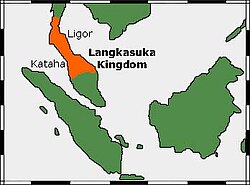
WHAT IS LANGKASUKA?


Langkasuka (-langkha Sanskrit for "resplendent land" -sukkha for "bliss") was an ancient Hindu Malay kingdom located in the Malay Peninsula. Another possible source of its name could be the combination of (-langkha Sanskrit for "resplendent land" - and Asoka in tribute to the legendary Mauryan Hindu warrior king who eventually became a pacifist after embracing the ideals espoused in Buddhism), the ancient kingdoms of the Malay Isthmus - Langkasuka having been one of them - believed by some scholars to have been first founded or rebuilt by emissaries or descendants of Asoka from Magadha in India.

The kingdom along with Old Kedah are probably among the earliest kingdoms founded on the Malay Peninsula. According to tradition the founding of the kingdom happened in the 2nd century. Malay legends claim that Langkasuka was founded at Kedah, and later moved to Pattani.

Saturday, January 29, 2011

WIKIPEDIA - THE WORD OF PARIAH

Word History: The word pariah, which can be used for anyone who is a social outcast, independent of social position, recalls a much more rigid social system, which made only certain people pariahs.

The caste system of India placed pariahs, also known as Untouchables, very low in society.

The word pariah, which we have extended in meaning, came into English from Tamil paaiyar,
the plural of paaiyan, the caste name, which literally means "(hereditary) drummer" and comes from the word paai, the name of a drum used at certain festivals.

The word is first recorded in English in 1613. Its use in English and its extension in meaning probably owe

much to the long period of British rule in India.

The American Heritage® Dictionary of the English Language, Fourth Edition copyright ©2000 by Houghton Mifflin Company. Updated in 2009. Published by Houghton Mifflin Company. All rights reserved.

SEJARAH

SEJARAH

|
1. Sejarah menceritakan apa yang telah berlaku dahulu kepada sesuatu negara atau bangsa. Tidak semua yang diceritakan diasaskan kepada fakta yang benar-benar berlaku. Tiap negara dan tiap ahli sejarah mengutamakan kepentingan negara apabila menulis berkenaan sejarah yang dilalui oleh negara masing-masing.

2. Demikian penulis sejarah British apabila menulis berkenaan pertempuran perang di Waterloo mendakwa bahawa pertempuran itu telah selesai dimenangi oleh Duke of Wellington, Jeneral yang mengetuai tentera British sebelum tentera Jerman yang diketuai oleh Blucher sampai ke Waterloo untuk membantu Wellington.

3. Ahli sejarah Jerman pula menulis bahawa Wellington hampir kalah di Waterloo apabila Blucher sampai dan menyelamatkan tentera British dan seterusnya memberi kemenangan kepada tentera gabungan Jerman dan British.


4. Banyaklah rencana dalam buku sejarah yang memberi gambaran yang berlainan dan berbeza berkenaan dengan peristiwa yang sama kerana kepentingan negara masing-masing.

5. Kita jarang membaca dalam buku sejarah Barat bahawa negara Sepanyol ditawan dan dikuasai orang Islam selama 800 tahun, atau kekalahan teruk tentera British di Gallipoli, Turki, di tangan tentera Turki pimpinan Mustafa Kamal.

6. Sekarang kita dengar pendapat bahawa dalam menulis sejarah negara kita sensitiviti semua kaum mesti diambil kira. Soalnya setakat manakah yang sensitiviti boleh menidak kebenaran sejarah? Jika ia keterlaluan maka sejarah yang akan dipelajari oleh penuntut kita akan menjadi cerita dongeng dan bukan sejarah.

7. Umpamanya ada dakwaan berkenaan dengan penduduk asal semenanjung ini yang bercanggah dengan kebenaran. Apakah kerana sensitifnya perkara ini maka kita tidak akan sebut berkenaan penduduk asal negeri-negeri Semenanjung, berkenaan orang asing yang datang menduduki semenanjung ini, yang menjadikan bahasa tempatan sebagai bahasa mereka, menerap sebahagian daripada budaya dan pakaian tempatan sebagai budaya dan pakaian mereka. Sekarang tidak ada lagi orang seperti ini kerana di zaman ini perlakuan seperti ini tidak dapat diterima oleh kaum tertentu.

8. Dan banyaklah lagi kebenaran sejarah yang boleh dianggap sensitif, sensitif kepada Melayu, Cina, Tamil, Iban, Kadazan dan lain-lain suku kaum. Jika semua yang sensitif kepada kaum-kaum di Malaysia ditapis maka tidak ada pelajaran yang akan diperolehi penuntut.

9. Sebaliknya satu daripada hasil dari matapelajaran sejarah ialah kita lebih prihatin dengan tidak melakukan kesalahan-kesalahan dahulu dalam tindak-tanduk rakyat dan pemerintah. Jika dahulu sistem raja berkuasa mutlak kerap membinasakan negara, maka sistem itu diganti dengan sistem pemerintahan oleh rakyat. Tanpa pengalaman dalam sejarah maka pembetulan cara pemerintahan negara tidak akan dapat dibuat.

10. Kata George Santayana, seorang ahli pemikir Amerika, "Mereka yang lupa akan sejarah akan didera dengan mengulangi kesilapan mereka berkali-kali".

11. Kita semua belajar dari pengalaman. Jika zaman ini lebih baik iklimnya daripada dahulu sebabnya ialah kerana kita tidak amalkan kesilapan-kesilapan dahulu. Kita telah belajar dari pengalaman kita dan pengalaman ini adalah sebahagian dari sejarah.

12. Jika kita lupakan atau ketepikan pengalaman dahulu yang kita alami tak dapat tidak pembaikan iklim dalam masyarakat manusia tidak akan menjadi lebih baik.

13. Saya telah baca buku teks sejarah dan saya dapati banyaklah peristiwa yang penting yang berlaku di zaman penjajahan British, Jepun, Siam dan sekali lagi British yang tidak terdapat dalam buku-buku ini.

14. Saya tahu apa yang tertinggal atau apa yang tidak diberi ulasan yang tepat kerana saya melalui zaman-zaman ini. Saya harap penulis yang akan menulis buku teks yang baru, sambil mengambilkira sensitiviti tetapi akan berpegang kepada kebenaran.

15. Oleh kerana semua ini maka janganlah kita terlalu ghairah untuk tidak menyentuh sensitiviti kaum-kaum di negara tercinta ini sehingga hilang segala pelajaran yang boleh diperolehi dari sejarah kita yang benar.

******

SPAIN UNDER ISLAMIC RULES

Muslim Iberia

In the 8th century, nearly all of the Iberian Peninsula was conquered (711–718) by largely Moorish Muslim armies from North Africa. These conquests were part of the expansion of the Umayyad Islamic Empire. Only a small area in the mountainous north-west of the peninsula managed to resist the initial invasion.

Under Islamic law, Christians and Jews were given the subordinate status of dhimmi. This status permitted Christians and Jews to practice their religions as people of the book but they were required to pay a special tax and to be subject to certain discriminations.[15][16]

Conversion to Islam proceeded at a steadily increasing pace. The muladies (Muslims of ethnic Iberian origin) are believed to have comprised the majority of the population of Al-Andalus by the end of the 10th century.[17][18]

La Giralda, the bell tower ofSeville Cathedral

The Muslim community in the Iberian peninsula was itself diverse and beset by social tensions. The Berber people of North Africa, who had provided the bulk of the invading armies, clashed with the Arab leadership from the Middle East.[note 11] Over time, largeMoorish populations became established, especially in the Guadalquivir River valley, the coastal plain of Valencia, the Ebro River valley and (towards the end of this period) in the mountainous region of Granada.[18]

Córdoba, the capital of the caliphate, was the largest, richest and most sophisticated city in western Europe. Mediterranean trade and cultural exchange flourished. Muslims imported a rich intellectual tradition from the Middle East and North Africa. Muslim and Jewish scholars played an important part in reviving and expanding classical Greek learning in Western Europe. The Romanized cultures of the Iberian peninsula interacted with Muslim and Jewish cultures in complex ways, thus giving the region a distinctive culture.[18] Outside the cities, where the vast majority lived, the land ownership system from Roman times remained largely intact as Muslim leaders rarely dispossessed landowners, and the introduction of new crops and techniques led to a remarkable expansion of agriculture.[citation needed]

In the 11th century, the Muslim holdings fractured into rival Taifa kingdoms, allowing the small Christian states the opportunity to greatly enlarge their territories.[18] The arrival from North Africa of the Islamic ruling sects of the Almoravids and the Almohads restored unity upon the Muslim holdings, with a stricter, less tolerant application of Islam, and saw a revival in Muslim fortunes. This re-united Islamic state, experienced more than a century of successes that partially reversed Christian gains.